Reviewed by Cameron Pechia, Founder, WA Insurance License 71186
Last reviewed: 8/17/2026
Key takeaway: AI dashcams for trucking pair road-facing and driver-facing cameras with software that flags risky driving in real time. They cut accidents, speed up claims, and give insurers a clearer picture of your risk. They also record everything your drivers do in the cab, which is exactly why half your fleet doesn't want them anywhere near the truck.
In July 2026, a driver in San Jose tried to collect an insurance payout for a crash he caused himself. He told his insurer a semi-truck rear-ended him while he sat still in traffic. A witness had already called 911 to report the opposite: swerving, brake-checking, the whole show. Investigators pulled the semi's dashcam footage. It backed up the witness. The driver was convicted of felony insurance fraud, sentenced to 60 days in county jail, and ordered to pay over $4,000 in restitution.
That footage didn't come from a law firm or a tech startup. It came from a trucking company that installed a camera because it was cheap protection against exactly this kind of claim. Every fleet owner weighing AI dashcams is really deciding something narrower: do you want your insurer working from facts, or from whichever version of events sounds most convincing?
Table of Contents
What is an AI dashcam, and how is it different from a plain dash cam?
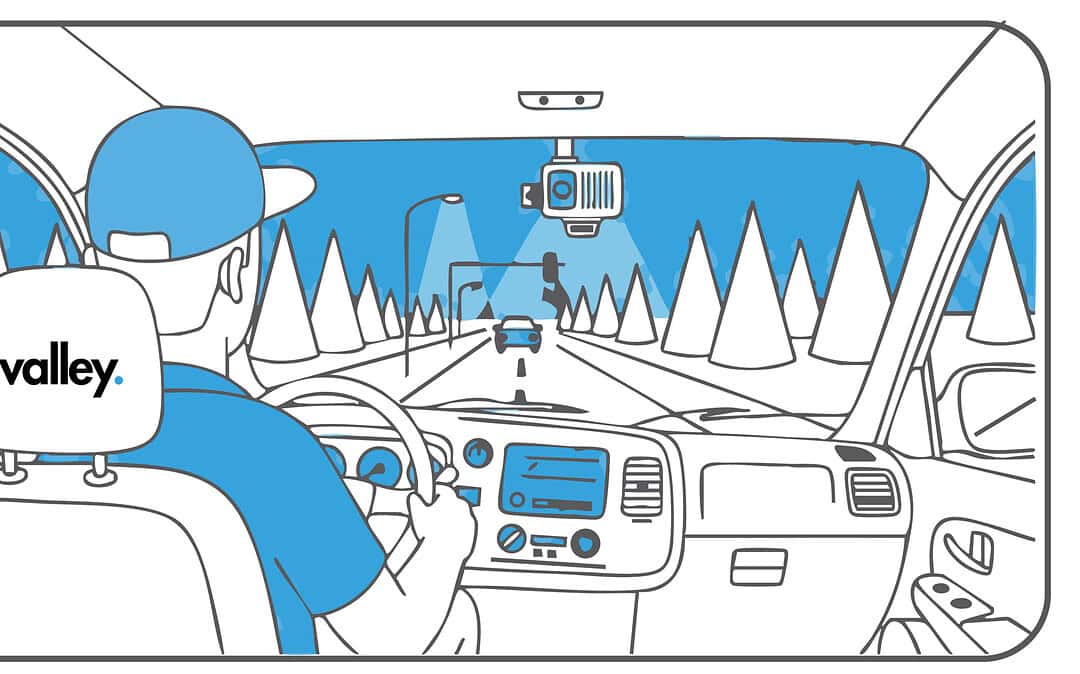
An AI dashcam pairs a standard road-facing camera, and often a second driver-facing lens, with software that reads the footage as it's captured instead of waiting for a manager to review hours of tape later. A plain dash cam just records. An AI dashcam watches what it records and does something with it.
The software looks for specific patterns: hard braking, tailgating, lane drift, a phone coming up near a driver's ear, eyes staying closed a beat too long. When it catches one, it can alert the driver right away, a chime or a voice prompt, and push a short clip to a dashboard for a safety manager to review.
Most fleets land on event-triggered recording instead of nonstop video. Storing eight hours of footage a day gets expensive fast, and drivers resent it more than almost anything else about the system.
How do AI dashcams actually cut down on trucking accidents and claims?
AI dashcams cut accidents by coaching drivers on risky habits before those habits cause a wreck, and they cut claims costs by giving your insurer video proof instead of two people arguing about who's telling the truth.
I've reviewed enough denied and delayed claims to know the pattern by now. The ones that drag on for months aren't the ones with video. They're the pile of paperwork with two conflicting accounts, a police report that split the difference, and nothing solid enough to settle the argument. A clear clip ends that fight in a day.
The Federal Motor Carrier Safety Administration tracks thousands of large-truck crash fatalities and tens of billions in annual crash costs every year. Even a small drop in preventable accidents moves real money.
What happened when a semi's dashcam caught a driver committing insurance fraud
A New Jersey fleet running about 160 trucks installed in-cab cameras and watched phone use behind the wheel drop by roughly 90 percent, according to Trucking Dive. The safety director there said the company's insurance costs eventually settled around 60 percent of what they'd been paying three years earlier, though he credited that to the broader safety culture the cameras helped build, not the hardware alone.
That's the honest version of the pitch. A dashcam doesn't lower your rate by existing. It lowers your rate by changing what your drivers do when nobody's watching, which is the whole point of the thing.
Do AI dashcams lower your trucking insurance premiums?
AI dashcams don't automatically lower your premium, but the safety data they generate can support a better rate over time if your carrier factors it into underwriting.
Insurers price you on loss history and risk exposure, not on what equipment sits on your dashboard. A camera that sits idle in the glovebox app, ignored, does nothing for your renewal. A camera tied to a real coaching program that reduces hard-braking events and speeding incidents gives your broker something concrete to bring to underwriting at renewal.
Some carriers will factor a documented AI dashcam and coaching program into a better experience modifier or a preferred pricing tier. Whether that applies to your policy, and by how much, depends entirely on your carrier and your claims history. Ask your agent directly what your specific markets will credit before you promise your drivers or your ownership group a number.
Why do so many truck drivers hate AI dashcams, and are they wrong to?
Truck drivers generally accept road-facing cameras but push back hard on the ones pointed at them, and no, that reaction isn't irrational.
A cab is the closest thing a long-haul driver has to personal space for ten or twelve hours a day. A lens pointed at their face during that time feels less like a safety tool and more like a supervisor riding along uninvited. OOIDA's Land Line Media has covered this exact divide for years: drivers are fine with the forward view, and consistently uneasy about the one aimed back at them.
The complaint isn't usually about safety. It's about what happens to the footage. Is it reviewed constantly or only after a flagged event? Does it get pulled out to justify a write-up over something minor? Drivers who've seen footage used to nitpick instead of coach don't come back around, and some quit over it.
Is it legal to record your drivers with an AI dashcam?
Recording the road and the cab with a dashcam is legal in commercial vehicles across the country, but audio recording and biometric data collection trigger separate state laws that vary by where your trucks run.
Video-only recording in a company-owned truck generally falls under an employer's right to monitor its own equipment. Audio is a different animal. Several states require consent from everyone being recorded, not just the driver, before audio capture is legal, and getting that wrong exposes you to a wiretapping claim that has nothing to do with trucking.
Some AI dashcams also use facial geometry to detect fatigue or distraction, which counts as biometric data in states like Illinois under its Biometric Information Privacy Act. If your fleet crosses state lines, and most do, build your camera policy around the strictest state you run through, not the loosest.
How do you roll out AI dashcams without losing your best drivers over it?
Rolling out AI dashcams without losing drivers comes down to explaining the system before installing it, choosing event-triggered recording, and using the footage to coach rather than to punish.
- Loop drivers in before the cameras show up. Let them see exactly what the system records and what it doesn't.
- Choose event-triggered recording over continuous. It costs less and it's the version drivers can actually live with.
- Put the access policy in writing. Name who can pull footage, for what reason, and how long it's kept.
- Use flagged events for coaching conversations first. Save discipline for patterns, not one bad afternoon.
- Tell drivers the camera protects them too. A clean clip clears a driver of blame faster than any statement ever will.
Fleets that skip step one are the ones that end up with a resignation letter and a camera nobody trusts.
What should you actually look for in an AI dashcam system?
Look for event-triggered recording, dual-facing cameras with a physical shutter option, cloud upload for flagged clips, and a system that integrates with your existing telematics instead of adding a second dashboard nobody checks.
Dual-facing setups now make up the majority of fleet installs. The National Private Truck Council's 2022 benchmarking survey found 72 percent of member fleets had adopted dash cams, and 56 percent of those ran dual road- and driver-facing systems.
Whatever system you pick, confirm how it handles storage during a claim. Cameras that overwrite footage every 24 to 72 hours are useless if nobody pulls the clip fast enough. That single detail matters more than any headline feature the sales rep leads with, and it's worth reviewing alongside how your fleet handles ELD data after a wreck, since adjusters increasingly want both pulled together.
An AI dashcam is a tool your underwriter will notice, but it doesn't replace the coverage underneath it. If a claim goes sideways regardless of what the footage shows, your commercial trucking insurance is what actually pays it. Cameras that generate good data can also help you get out from under an informal insurance blacklist if your fleet has been flagged for rising claim frequency. And if your fleet runs parking lots and drop yards often, pair your camera policy with a parking lot claims checklist: that's where dashcam footage settles disputes fastest.
If you're shopping AI dashcams specifically to chase a rate reduction, talk to your broker first about what actually moves your trucking insurance rates. Technology helps your case. It's rarely the whole case.
Bring us your fleet's current camera setup, or your plan to add one, along with your loss history and your DOT compliance picture, and we'll tell you where that data actually helps your renewal and where it doesn't. Get a coverage review or quote at Pullsure.
FAQs
Do AI dashcams lower trucking insurance premiums?
Not automatically. The safety data they generate can support a better rate at renewal if your carrier credits it, but that depends on your specific insurer and your claims history.
Is it legal to have a camera facing the driver in a commercial truck?
Generally yes for video in a company-owned vehicle, but audio recording and biometric features like facial monitoring trigger separate state consent laws that vary widely.
What's the difference between event-triggered and continuous dashcam recording?
Event-triggered systems only save footage around a flagged incident like hard braking or a collision. Continuous systems record everything, cost more to store, and draw far more driver pushback.
Can dashcam footage be used against a driver in a lawsuit or claim?
Yes. Footage can support either side of a claim, which is exactly why clear internal policies on access and retention matter before an incident happens, not after.
Do drivers have to consent to being recorded in the cab?
Video monitoring in a company vehicle typically doesn't require consent, but several states require all-party consent for audio recording specifically.
How long should a fleet keep dashcam footage?
Routine footage is commonly kept 30 to 60 days, while footage tied to a claim or incident should be preserved until the claim closes. Confirm retention rules with your insurer and attorney.
Can AI dashcams replace a safety manager?
No. They flag risk and speed up review, but a person still has to interpret patterns, run coaching conversations, and make judgment calls the software can't.